
Business / Professional
Why Your Clothes Do Invisible Work in High-Stakes Meetings
Cognitive fatigue changes how decision-makers judge you. Your clothing can either lighten their mental load — or add to it.
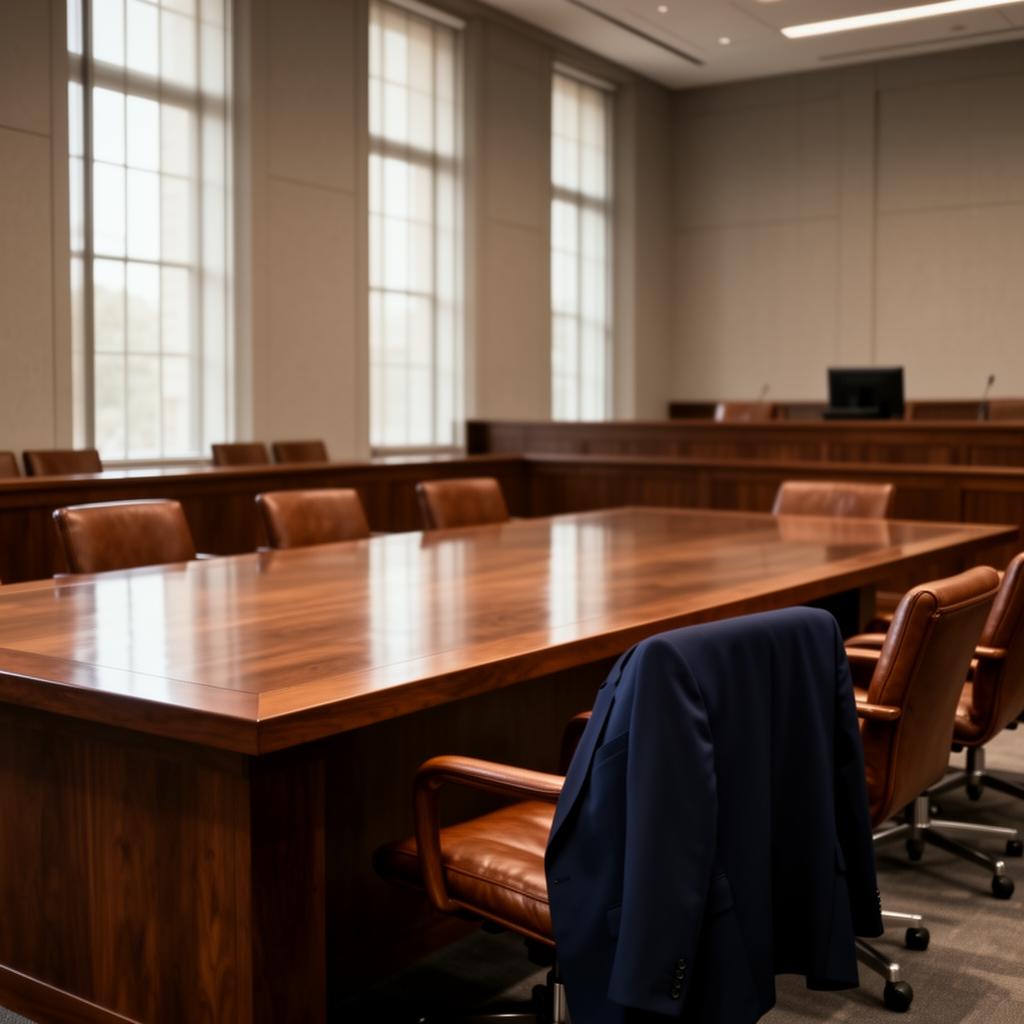
When you sit across from someone holding something important in their hands — a contract, an offer, a verdict, a promotion decision — you rarely think about what time it is or whether they have eaten. You think about your arguments, the facts, your preparation.
You should also think about the rest.
The experiment that changed how we view rational decisions
In 2011, researchers from Columbia University and Ben-Gurion University in Israel published a study in Proceedings of the National Academy of Sciences that remains one of the most cited in behavioral science. Shai Danziger, Jonathan Levav and Liora Avnaim-Pesso analyzed 1,112 parole decisions made by eight experienced Israeli judges over ten months.
The result was striking. Right after a meal break, judges granted parole in about 65% of cases. As the session progressed, that rate fell gradually — sometimes to nearly 0%. After the next break, it jumped back to 65%.
Same judges. Same laws. Same case types. Different hour.
The authors called this ego depletion — cognitive exhaustion in which the brain, overloaded by a stream of decisions, starts to prefer the easier, safer, more conservative answer. For a judge, the conservative answer means: keep them in prison.
What to do with critiques of the study
Here we must be honest — something many stylists fail to do when citing research. Over the years, serious critiques of Danziger's study have appeared. In 2016, Keren Weinshall-Margel and John Shapard suggested the effect may be partly a statistical artifact: favorable decisions take longer, and judges may schedule sessions so as not to start a complex case just before a break.
Even granting that critique, the underlying principle remains intact and is confirmed by dozens of other studies: cognitive fatigue changes how we make decisions. When exhausted, we lean more on stereotypes, fast heuristics and visual cues — exactly when those being judged have the least control.
What this has to do with clothing
Here is the connection that really matters if you are a lawyer, a negotiator, a senior sales manager, a diplomat or a politician:
When the other party is deciding about you, they are not always at peak form.
They may have met fifteen people before you that day. They may have been reading offers from three companies since morning. They may have been moderating court procedures for eight hours. By the time you reach them, they have less cognitive capacity than you imagine — and that changes how they judge you.
Cognitive psychology calls this cognitive load — the mental burden a person carries at any moment. The greater the load, the more decisions get handed to automatic systems: fast judgments based on surface cues, because there is no mental resource left to go deeper.
And this is where clothing plays a role that has nothing to do with fashion.
Visual clarity as a gift to the other person
One conclusion from first-impression research (Willis and Todorov, Princeton, 2006) is that people form judgments about competence, trustworthiness and dominance in under 100 milliseconds. When the other person is fresh, those judgments get corrected by later data. When they are exhausted — they stick.
That means in front of an overworked decision-maker, every mismatch, every "not quite right" outfit, every visual ambiguity is filtered through a tired mind looking for the fastest way to close the judgment. They do not pause to think: "Wait, let me give more weight to the arguments than to the first glance."
They do the opposite.
This is not "dress to impress"
It is something much more precise: clothing can offload the other person's cognitive burden.
When your visual presence is clear — style matching context, silhouette clean, nothing pulling attention sideways — the other person receives something valuable. They do not have to spend mental energy decoding you. They can direct it at your arguments, the deal, the real decision.
When your visual presence is ambiguous — too casual for a heavy conversation, too ornate for a quiet negotiation, in the wrong register for the room you are in — you demand cognitive effort from them. And cognitive effort is exactly what a depleted decision-maker does not want to spend on you.
The practical takeaway
People whose work depends on earning judgments from others — courtroom lawyers, sellers of complex solutions, diplomats, board representatives — often think of their clothing as "impression." That is the wrong frame.
Think of it instead as a gift you give to the other person's brain. Clear clothing in the right register says: "You don't have to spend effort on how I look. You can concentrate on what I'm saying."
That is the work clothing does quietly, in the first 100 milliseconds of your meeting — especially when the other person is not in shape to do it themselves.
Need to discuss a styling solution?
Get in touch