
Uniforms / Medical
Cotton, polyester or performance fabrics: what actually works for a medical uniform?
Why “100% cotton” is no guarantee of a good medical uniform, and how to choose fabric around real work, movement and the team.
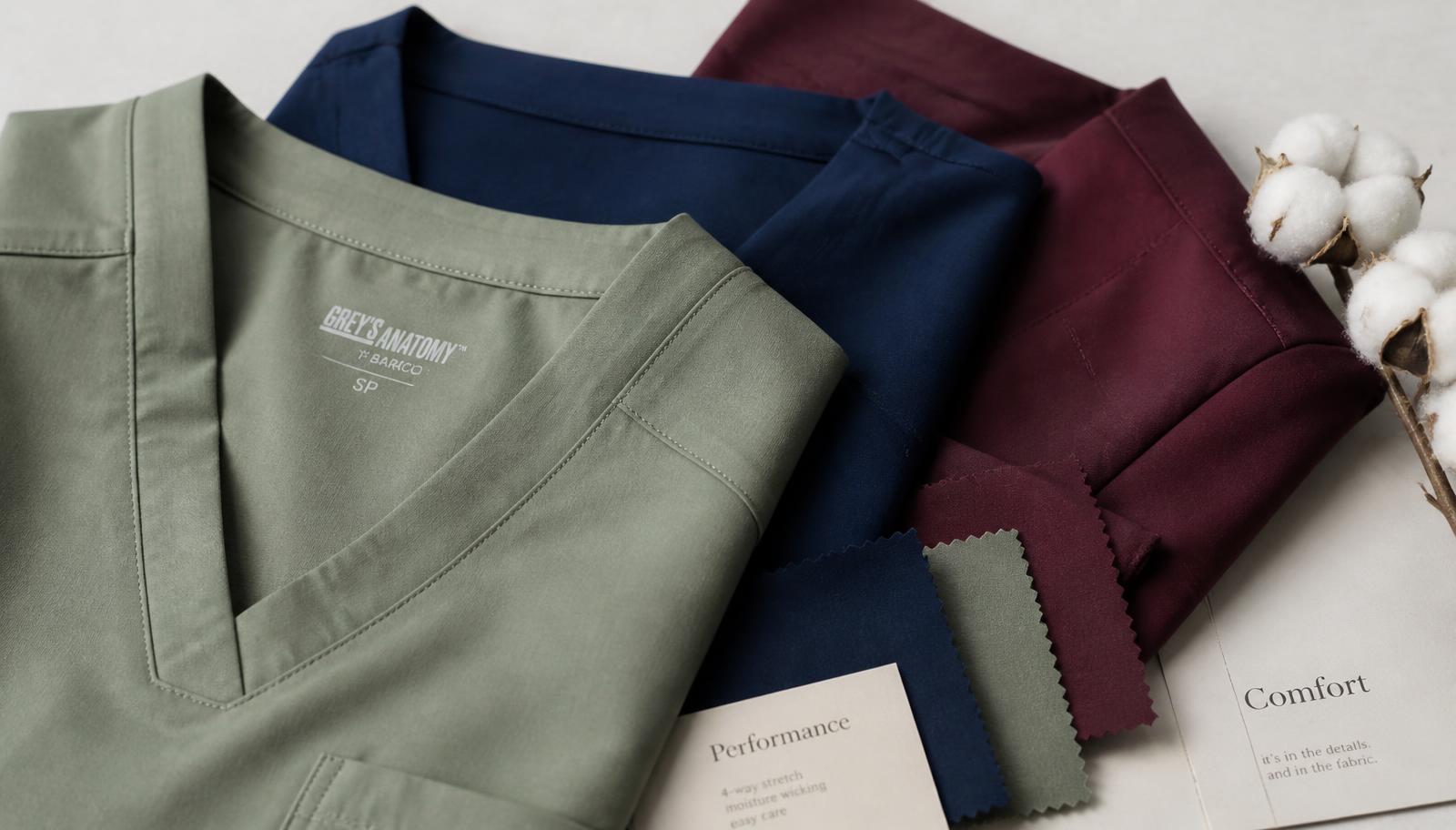
When choosing a medical uniform, fabric is often the first criterion. “We want cotton.” “No polyester.” “It has to breathe.” These are the most common requests I hear from clinics and medical professionals — and they make sense.
A medical uniform is worn for hours. People stand, walk, bend and work under pressure in it, sometimes in warm rooms. It is washed frequently and still has to keep its shape and professional look.
So the question is not simply “which fabric is best?”, but “which fabric suits this person, this job and the way the uniform will actually be used?” And the answer is not always 100% cotton.
Why cotton is so popular
Cotton's great advantage is how it feels on the body: a good cotton fabric can be soft, pleasant and breathable. But 100% cotton also creases more, dries slower, can lose its shape after repeated washing and often lacks the stretch that constant movement requires. “100% cotton” on a label is not, by itself, a guarantee of a good medical uniform — density, structure, finishing, garment construction and make-up all matter.
Is polyester really that bad?
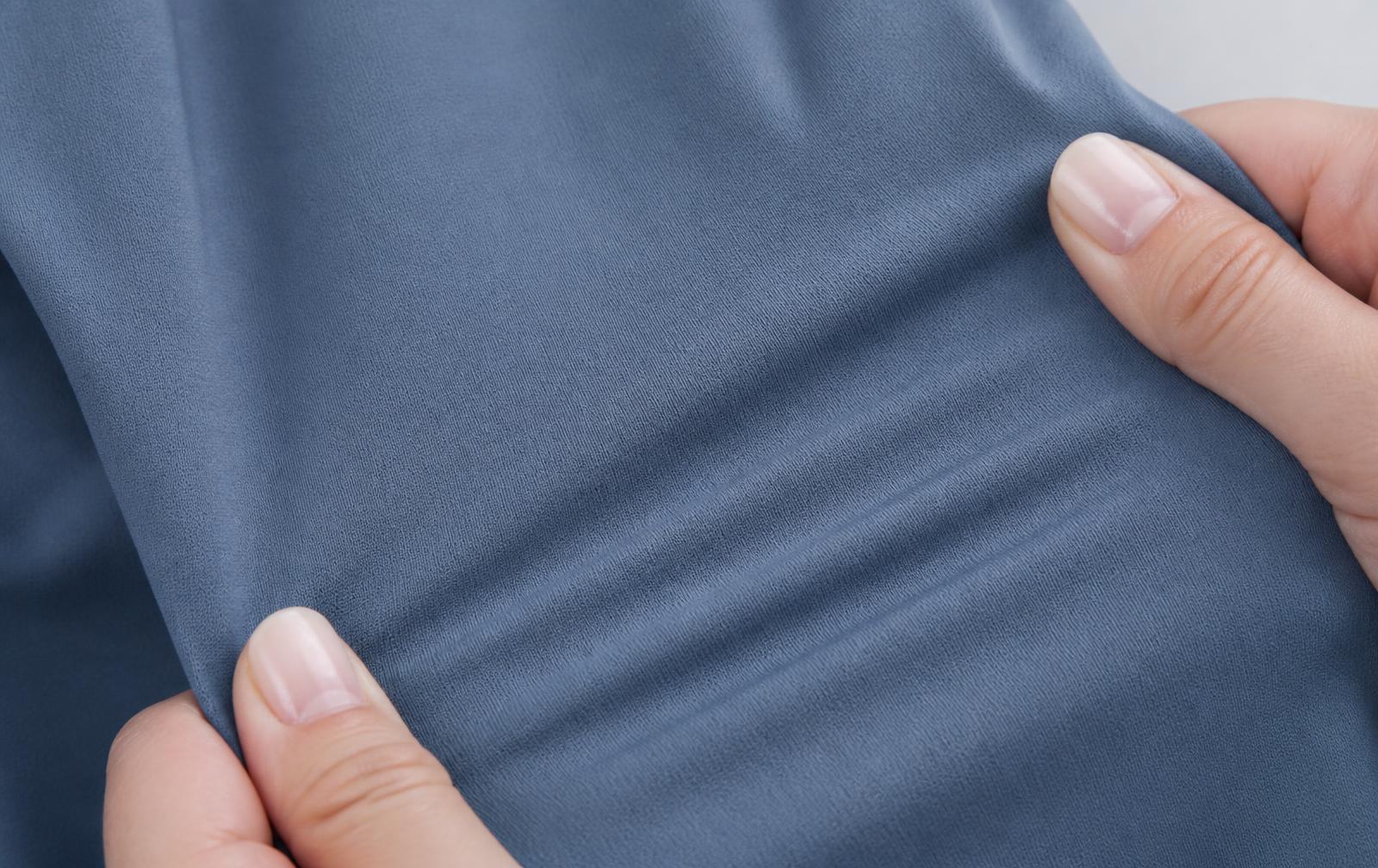
Polyester has a poor reputation, partly deserved — anyone who has worn a cheap synthetic tunic knows the feeling. But judging every polyester blend the same way is a mistake. Modern textiles are far more advanced, and synthetic fibres can add shape retention, less creasing, faster drying, higher wash resistance, easier care and a longer garment life. The better question is: how much polyester, what is the rest of the composition, how is the fabric built, and how does it behave after many washes?
What does “performance fabric” mean?
Performance fabrics are not one specific material, but textiles engineered to perform under intensive daily wear: more stretch, moisture management, quick drying, better recovery after movement, easier care. Medical clothing is increasingly borrowing technology we have long known from quality sportswear. A uniform can be a work tool built around how the body moves.
Elastane — a small percentage, a big difference
Medical professionals do not sit behind a desk for eight hours. They bend, reach, crouch and move between rooms and patients. A uniform can look perfect in front of the mirror and be uncomfortable twenty minutes into a real shift. Freedom of movement always comes before a beautiful product photo.
No single fabric is right for everyone
A dentist working long periods in one position does not have the same requirements as a physiotherapist, a nurse or a specialist in an aesthetic clinic. What matters: how many hours the uniform is worn, how actively the person moves, how often it is washed and how it must look within the clinic's visual environment. In dental, dermatological and aesthetic clinics especially, the team is what patients see most.

Fabric cannot be chosen apart from the cut
The same fabric behaves completely differently in two different cuts. The model has to account for body movement, tunic length, pocket placement, waist height, shoulder width, how the garment sits when seated, the need to carry instruments — and the different body types on the team.
One clinic does not mean one body
This is why I dislike the “one model for everyone” approach. Real teams include tall and short people, different proportions, men and women, some who prefer a relaxed fit and others who feel best in a tailored cut. The goal is not for everyone to be identical, but to look like one team — through a shared palette, fabrics, details and visual language, with different models for different people. That is the difference between buying medical clothing and building a uniform system for a medical team.
How to choose
Start not from a catalogue but from questions: how does the real working day run, what does the team dislike about the current uniforms, who moves the most, who struggles to find a suitable fit, how often are garments washed, what matters more — natural feel, easy care, stretch or a combination — and how should the team look next to the interior and the clinic's positioning? And one question that is often missed: in six months, will you be able to easily reorder one uniform for a new team member?
My rule: function first, then fabric, then look — never one at the expense of another
Medical professionals should not have to choose between comfort and looking professional. Sometimes the answer is a high-cotton fabric, sometimes a quality blend, sometimes a modern performance textile — and sometimes different solutions for different roles in the same team.
The best medical uniform is not the one with the “best” composition on the label. It is the one people forget they are wearing — and that still looks professional at the end of the day.
Looking for uniforms for a medical team?
DressClass helps clinics and medical practices build a complete uniform solution — from fabrics, brands, models and fits to fittings, orders and an easy reordering system. We also work on uniform solutions for other sectors and on business image and dress code. Get in touch to discuss your project.
Need to discuss a styling solution?
Get in touch